|
||||||
Giuseppe Arcimboldo | Slightly Off Cemter Painter of Fancy
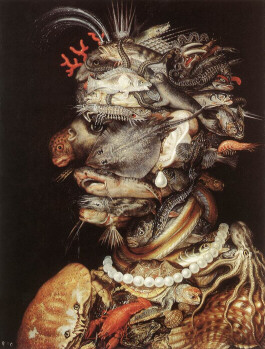
Giuseppe Arcimboldo owes his reputation to the series of composite portraits of heads made up of a variety of objects, both natural and man-made. Most of these paintings were created at the court of Rudolf II, who hired Giuseppe as his court painter, placing him at the center of Rudolf's eccentric menagerie of artists, scientists and charlatans. Arcimboldo's job included the task of endlessly copying portraits for the imperial family, and other heads of state. In the sixteenth century every painting had to be copied by hand. Just as they had to copy every book by hand. It was during the endless hours spent in his studio that Giuseppe came up with the style of painting that would forever separate him from the other painters of his day. The Composite HeadGiuseppe Arcimboldo began to paint portraits of people not as we see them, but with rendered clumps of mammals, fish, vegetables and other natural objects. Instead of a nose, you might see an elephant, instead of an ear, you might see a pelican or alligator. To this new style Giuseppe Arcimboldo applied his great talent and style. Brenda Harness, Art Historian
| ||||||
|
 QUOTE
QUOTE
|
Welcome ! |
|
We respect your privacy and will never sell your personal information. |
| Click here to sign up for our newsletter. |
Buy great
art books
at Amazon!
Home Glossary of Terms Contact Us About Us Newsletter Subscription